Showing posts with label UA. Show all posts

Monday, March 28, 2016

Assessments

  • What is your philosophy on assessment? 
  • What are your impressions about the 2 formative assessment technologies (PearDeck & EduCanon) Scott shared?
  • What was the most striking thing you took away from Scott's presentation? How will it impact your own learning?

Assessments are essential to the classroom and is part of becoming an effective teacher. Without assessments, how can you, as a teacher, know and understand where your students are at? It can be as simple as an exit slip, or nodding your head if you understand, to  a final exam at the end of a semester. The assessments that the students take show teachers as well as the district (etc.) what they have learned and retained over the course of the day/semester/year, so on. School and teaching would almost be pointless without any type of assessment. There are so many different types of assessments, specifically formative and assessments. I learned the important difference between the two during the weekly video and many websites we had to visit to read about.

Formative Assessments 
Summative Assessments 
Anecdotal records Final exams 
Quizzes and essays Statewide tests (FCAT) 
Diagnostic tests National tests 
Lab reports Entrance exams (SAT and ACT)

In my opinion, both are super critical and important, but formative assessments help out both the student and teacher a tremendous amount during the year. It's more relaxed and only shows where each student is during their learning experience. Summative assessments create more pressure, especially for students who have test anxiety or get nervous. 

Peardeck is so beneficial and useful in a classroom. After watching the weekly video, I saw firsthand how it worked and how it showed where the students were during the lesson, what they understand and what they did not know. It's easy to use, even as an early education teacher. It shows how many students understand and how many are still lost. I will definitely use Peardeck as a future educator.
 I will also use PearDeck during my lessons as well. It is a great for formative assessments. It shows how students learn and move at different paces and what I need to do as a teacher to help the students who are behind or confused. 

I was so surprised during Scott's presentation with how many different types of assessments there were, especially for formative assessments, as well as technology available for assessments. I've only ever had face-to-face, pencil and paper tests until I got to college, so it is still new to me. As a future educator, I will absolutely use the technologies available for both formative and summative assessments. 

Monday, March 14, 2016

Week 9 Learning Spaces

  • How can space (“learning space”) encourage student engagement and learning?
  • What role can Google Apps for Education (GAFE) play in the development of learning spaces?
  • What assumptions should we challenge as we design learning spaces for the future? 
  • How does The University of Akron's campus currently approach the design and development of informal learning spaces?
  • How well do the informal learning spaces on UA campus align with your needs and expectations as a learner? 


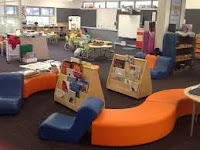
Learning spaces, I believe, is just as important, or should be just as important as the content they are learning. A bad learning space can greatly disable a student from learning what they need to be learning. After reading this Article, I have seen just how many design elements that should be incorporated into the 21st century classroom. To begin, the furniture should be able to accommodate numerous learners as well as be repositioned for independent learners. Another thing is that not all students have their iPads or laptops ready, so make sure that the classroom is able to recharge what they need to engage classroom activity. Third, make sure the teacher has access to technology and are smart enough to lecture and teach. Lighting is also important, either dimming or enhancing it is imperative, also to accommodate students in the front of the classroom as well as the back. Another is having physical space beyond just one classroom, and lastly has fewer expansive gatherings. As a future teacher, it is important that make the bet possible classroom setting to engage my students thoroughly. This video, shows just how helpful a classroom setting is to learn. 

Google Apps tremendously help the development of learning spaces. It helps encourage differentiated instruction, especially with more students becoming engaged in online courses and technology in general. On top of that, it helps peers connect with their teachers, as well as each other. It creates more creativity and ideas and helps a classroom develop technologically. 

The biggest assumption  that should be made is that a certain classroom benefits every student. Everyone learns in a different way or setting, so making sure that the teacher knows how each student learns is important. Another assumption is that a physical classroom is the best way to learn. In today's world, especially pertaining to this class, learning is literally everywhere and can happen anywhere and anytime. 

From what I have seen and noticed, The University Of Akron's campus has been making the learning spaces more informal and diverse. No two classrooms are the same. The desks and chairs are always different, the setting is different, and the way my teacher's present their lesson is even different. Even the lounges or hang out places are different. Some have couches, some with high chairs, low chairs, chairs that lean back, etc. The library as an endless amount of learning spaces. They have dividers between desks, small rooms to meet up with groups, couches, individual desks, long and short tables, and in almost every space they have outlets to plug in devices. 

Some classes I learn better in. For example, my one class has just a long row of connected desks with soft chairs, but I have a hard time paying attention and I do not have much room to put my belongings and the desks behind me are so close. It's also hard to communicate with my classmates. The classrooms I learn best in are the ones with a few desks together, so I'm only sitting my two or three other people and I focus so much better and can collaborate with my neighbors more easily. Akron for the most part, has great informal learning spaces because of the many options and really meets my needs as a student.